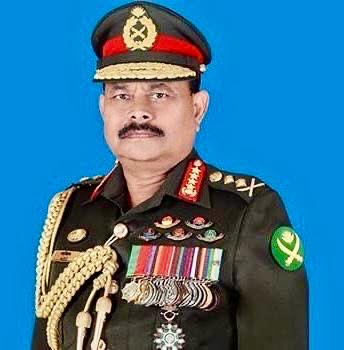
A military officer’s career cannot be meaningfully assessed merely by counting promotions, decorations, ranks or appointments. Those details establish a professional trajectory, but they do not necessarily explain what a commander contributed to the institutions he led.
A broader assessment requires other questions: What institutional changes took place during his tenure? What emphasis was placed on training and professionalism? Did modernization extend beyond equipment? Were doctrine and institutional knowledge strengthened? How did he engage internationally? And, perhaps most importantly, which of these contributions can be established through reliable records rather than personal claims? Viewed through that lens, the career of General (Retd.) Dr. Aziz Ahmed presents a number of significant areas for examination.
He served as Chief of Army Staff of the Bangladesh Army from 25 June 2018 to 24 June 2021. Before becoming Army Chief, he held several important command and staff appointments, including Director General of Border Guard Bangladesh (BGB), General Officer Commanding (GOC) of the Army Training and Doctrine Command (ARTDOC), and Quartermaster General at Army Headquarters. His career therefore extended across conventional military command, border security, training and doctrine, institutional administration and the leadership of the country’s largest armed service.
The question is not whether every achievement of the Bangladesh Army during this period can be attributed to one individual. Clearly, it cannot. Military institutions evolve through the cumulative efforts of successive commanders, officers, soldiers, civilian authorities and long-term national policies. The more relevant question is what role General Aziz Ahmed played during the periods in which he held responsibility.
From Artillery to Institutional Leadership
Commissioned into the Artillery Corps of the Bangladesh Army in 1983, General Aziz Ahmed progressed through a range of command, staff and training assignments. Such a career provides experience from different perspectives. Commanding a unit involves tactical leadership and discipline. Brigade and higher command require broader operational and administrative judgment. Leading a border-guarding force introduces responsibilities involving border management, law enforcement and coordination with civilian authorities. Training and doctrine, meanwhile, deal with the intellectual and institutional foundations of military effectiveness. General Aziz Ahmed’s career included all of these dimensions.
This breadth is relevant because the responsibilities of a Chief of Army Staff extend well beyond battlefield command. The Army Chief must deal simultaneously with force development, training, human resources, modernization, administration, international cooperation and national responsibilities. His earlier assignments therefore provide useful context for understanding his later tenure as Army Chief.
ARTDOC: The Institutional Importance of Training and Doctrine
One of the most significant assignments in his pre-Army-Chief career was his command of the Army Training and Doctrine Command, or ARTDOC. According to Bangladesh Army publications, General Aziz Ahmed assumed command of ARTDOC on 16 November 2016. ARTDOC occupies a particularly important position in a modern military because military capability is not created by equipment alone. Weapons and technology have value only when personnel are adequately trained and when doctrine enables those personnel to employ available capabilities effectively.
During his tenure, Bangladesh Army publications refer to the preparation of training-support books, manuals and doctrine-related documents covering a range of professional areas, including artillery, air defence, radar, armoured units, military police and engineering. They also refer to work relating to doctrine for military operations in hilly areas. The significance of these activities goes beyond the number of manuals produced.
Military institutions depend heavily on institutional memory. Commanders and officers eventually move on or retire, but professional knowledge can remain within the institution when it is incorporated into doctrine, manuals, training programmes and established procedures. In that sense, ARTDOC represents one of the less visible but more enduring dimensions of military development.
The strength of a professional army is partly determined by its ability to learn, adapt and transmit knowledge from one generation to the next. General Aziz Ahmed’s tenure at ARTDOC therefore deserves consideration in any assessment of his professional contribution.
BGB: Leadership Beyond the Conventional Military Structure
Another defining chapter was his service as Director General of Border Guard Bangladesh. He assumed command of the force in 2012, during a period when the organisation was undergoing significant institutional transformation following the Pilkhana tragedy and the transition from Bangladesh Rifles to Border Guard Bangladesh.
Contemporary reporting confirms his tenure as Director General from 2012 to 2016. Leading BGB involved a different set of challenges from conventional Army command. Border security encompasses surveillance and management of the country’s borders, prevention of smuggling and cross-border crime, coordination with other security and law-enforcement agencies, and interaction with civilian administration.
The assignment therefore required a combination of military leadership, administration and institutional management. His BGB tenure is significant not simply because he headed another major security organisation, but because it gave him experience in managing an institution undergoing structural and organisational change. He subsequently returned to the Army and assumed command of ARTDOC, giving his career a particularly broad institutional dimension.
Becoming Chief of Army Staff
On 25 June 2018, General Aziz Ahmed assumed office as Chief of Army Staff. The official Bangladesh Army record identifies him as the 16th Chief of Army Staff and records his tenure from 25 June 2018 to 24 June 2021.
The position placed him at the head of an institution whose responsibilities extend considerably beyond conventional warfare. The Bangladesh Army’s official description identifies national defence as its primary responsibility while also recognising its role, when required, in assisting civil administration, responding to disasters, supporting national development activities and contributing to United Nations peacekeeping operations.
Consequently, assessing an Army Chief requires consideration of several interconnected areas: operational readiness, training, force structure, modernization, personnel development, international engagement and institutional effectiveness.
Forces Goal 2030 and Continuing Modernization
General Aziz Ahmed’s tenure as Army Chief took place within the continuing implementation of Forces Goal 2030, Bangladesh’s long-term framework for the development and modernization of the armed forces.
According to Bangladesh Army’s official history, Forces Goal 2030 encompasses organisational expansion, creation of new units and formations, introduction of modern weapons and equipment, infrastructure development and structural changes.
A 2019 contemporary report, quoting General Aziz Ahmed, described the Army’s modernization as progressing in accordance with Forces Goal 2030. The important point is that modernization should not be reduced to procurement. A genuinely modern military requires at least three interconnected components: equipment, people and doctrine. Modern equipment requires trained personnel. Trained personnel require effective doctrine and realistic training. Doctrine must evolve in response to technology and changing forms of warfare.
Seen from this perspective, General Aziz Ahmed’s earlier experience at ARTDOC provided a professional connection between training and doctrine on one side and force modernization on the other. It would be inaccurate to portray modernization during his tenure as the work of one individual. Forces Goal 2030 was a continuing national programme. But it is equally reasonable to examine how a particular Army Chief implemented and advanced that programme during his tenure.
Training: The Less Visible Foundation of Military Power
Military training rarely attracts the public attention generated by new weapons, aircraft or infrastructure. Yet it is arguably one of the most important components of military capability. Weapons can be purchased relatively quickly. Institutional professionalism cannot.
The official ARTDOC material associated with General Aziz Ahmed’s tenure refers to training initiatives, visits to training establishments, development of training infrastructure and efforts to enhance professional capabilities. Such measures are significant because military effectiveness depends upon personnel who can operate technology, interpret doctrine, function under pressure and make appropriate decisions in rapidly changing circumstances. Training is therefore not merely preparation for war. It is the process through which professional military culture is maintained. This is one reason the ARTDOC chapter of General Aziz Ahmed’s career deserves greater attention than it might receive in a conventional account based primarily on ranks and appointments.
Bangladesh and United Nations Peacekeeping
Another important dimension of Bangladesh’s military identity is its longstanding contribution to United Nations peacekeeping. Bangladesh began participating in UN peacekeeping operations in 1988 and has since contributed personnel to numerous missions. Bangladesh Army publications emphasise the professionalism, discipline and adherence to UN mandates demonstrated by Bangladeshi peacekeepers.
During General Aziz Ahmed’s tenure as Army Chief, international engagement concerning peacekeeping also formed part of the Army’s external role. An ISPR publication concerning his 2021 visit to the United States referred to discussions with senior UN officials regarding the expansion of Bangladeshi peacekeeping contingents and the appointment of Bangladeshi officers to important positions within UN structures.
This is significant because peacekeeping is not simply a matter of deploying troops. It involves training to international standards, preparation for complex operating environments, participation of women peacekeepers, senior-level international appointments and sustained engagement with UN institutions. For Bangladesh, peacekeeping has also become an important instrument of international visibility and military diplomacy.
Increasing the Participation of Women Peacekeepers
The participation of women in peacekeeping has become an increasingly important aspect of international military engagement. According to an ISPR publication from 2021, an initiative during General Aziz Ahmed’s tenure sought to increase the participation of Bangladeshi women peacekeepers from 1.91 percent to 6 percent.
The same source referred to appreciation for the contribution of Bangladeshi women engagement teams in South Sudan. The importance of female peacekeepers extends beyond numerical representation. In many conflict-affected communities, women peacekeepers can facilitate communication with women and children and contribute to community engagement and protection-related activities.
The effort to expand women’s participation can therefore be viewed as part of the broader process of adapting Bangladesh’s peacekeeping contribution to evolving international expectations.
International Military Diplomacy
Bangladesh’s success in UN peacekeeping also creates an opportunity for its military officers to participate in international military institutions. Field-level performance is important, but representation within international policymaking and command structures can further strengthen a country’s influence and professional standing.
The documented engagement between General Aziz Ahmed and senior UN officials concerning peacekeeping contingents and Bangladeshi officers’ appointments therefore forms another relevant part of his international military profile. It demonstrates an approach to military diplomacy that extends beyond bilateral defence relations and into multilateral institutions.
Leadership Beyond Command
Military leadership is often associated with the ability to issue orders and maintain discipline. But institutional leadership is broader. A commander also influences organisational culture, professional standards, training priorities, human-resource development and institutional learning.
The sequence of General Aziz Ahmed’s assignments—from BGB to ARTDOC, Army Headquarters and ultimately Army Chief—gave him exposure to several different dimensions of organisational leadership. This does not establish that every institutional development during those years resulted from his personal decisions. It does, however, provide a basis for examining the priorities associated with the institutions under his command.
Reform and Institutional Continuity
The word “reform” is frequently used too loosely. True institutional reform is not simply the introduction of something new. It becomes meaningful when changes are incorporated into systems and continue beyond the tenure of the individual who initiated them. In a military organisation, reform may involve doctrine, training methods, technology, force structure, infrastructure, personnel development and organisational procedures.
Several aspects of General Aziz Ahmed’s career intersect with these areas. His BGB assignment coincided with an important period of institutional transformation. His ARTDOC tenure involved training and doctrine development. His tenure as Army Chief coincided with the continuing implementation of Forces Goal 2030 and broader modernization. Taken together, these assignments provide a basis for viewing institutional development as a recurring theme in his career.
The Army and National Development
The modern Bangladesh Army also performs functions beyond conventional defence. According to the Army’s official description, it may assist civil administration, respond to disasters and contribute to national development when directed under applicable laws and policies.
The Army’s engineering and other specialised capabilities have consequently been used in various national projects and emergency situations. Contemporary reports during General Aziz Ahmed’s tenure also highlighted the Army’s contribution to national development and disaster management alongside force modernization.
Nevertheless, an important distinction should be maintained: national development support is a secondary role. The primary responsibility of the Army remains national defence. The broader point is that modern military institutions increasingly possess capabilities—engineering, logistics, communications, medical and organisational—that can be utilised during national emergencies without changing their fundamental defence mission.
What the Record Shows
A journalist making a positive assessment of a public figure faces a particular challenge: the assessment must not become publicity. The same principle applies in the opposite direction. Controversy surrounding a public figure should not become a reason to disregard documented professional achievements. The appropriate approach is evidence. General Aziz Ahmed’s tenure as Chief of Army Staff is established by official records. His leadership of BGB is documented in contemporary reporting. His ARTDOC responsibilities and training and doctrine initiatives appear in Bangladesh Army publications. His engagement on UN peacekeeping issues is documented by ISPR.
These records provide legitimate grounds for examining his professional contribution. They do not, however, require a journalist to portray him as flawless or to attribute every institutional achievement to him personally. That distinction is essential. A credible assessment should identify what can be documented, distinguish it from interpretation, and leave broader historical judgments open to further evidence.
Change Is a Continuum
No Army Chief begins with a blank institutional slate. Modernization is a continuous process. Forces Goal 2030 itself illustrates this reality. One leadership may formulate or accelerate an initiative; another may implement it; a subsequent leadership may modify it in response to changing strategic and technological circumstances.
The same applies to training, doctrine and international peacekeeping. Therefore, General Aziz Ahmed’s contribution is best understood as part of a longer institutional continuum rather than as an isolated achievement.
This approach neither diminishes his contribution nor exaggerates it. It places his tenure within the proper historical context.
A Multidimensional Career
It is difficult to summarise General Aziz Ahmed’s professional legacy in a single phrase. He began his career as an artillery officer and subsequently served in command, staff and institutional leadership positions. He led BGB during a period of organisational transformation. He commanded ARTDOC, with its emphasis on training and doctrine. He served at Army Headquarters and ultimately became Chief of Army Staff.
The significance of this trajectory lies in its diversity. He experienced conventional military command, border-security management, institutional training, doctrine development, force modernization and international military engagement. That makes his career a useful case study in how a senior military officer can move between different forms of institutional responsibility.
What History Will Decide
The final judgment of a military commander rarely belongs to the present. Future historians will have access to documents that may not yet be publicly available, institutional records, government archives, international records, contemporary reporting and testimony from participants. Only then can the full impact of particular decisions be assessed with greater confidence. But some elements of General Aziz Ahmed’s career are already part of the public record.
His tenure as Chief of Army Staff is officially documented. His service as BGB Director General is established by contemporary sources. His work at ARTDOC is reflected in official military publications. His international engagement on peacekeeping has been documented by ISPR. These records provide a foundation for assessing his professional career.
They do not demand blind admiration. Nor do they justify dismissing his institutional contributions simply because his career has subsequently become the subject of controversy. The more responsible approach is to examine the record.
Final Assessment
Through a journalist’s lens, the story of General (Retd.) Dr. Aziz Ahmed is ultimately larger than the story of one individual. It is a story of a professional military career that passed through different institutions and responsibilities at different stages—from the Artillery Corps to BGB, from BGB to ARTDOC, from ARTDOC to Army Headquarters, and finally to the office of Chief of Army Staff. Across that journey, several themes recur: training, professionalism, institutional capacity, modernization, organisational change and international engagement.
The Bangladesh Army’s development has never been the achievement of one commander. It is the cumulative product of generations of officers and soldiers, successive military leaderships, national policy and institutional continuity. Within that longer history, however, General Aziz Ahmed’s career constitutes a distinct and noteworthy chapter. The proper measure of that chapter should be neither unquestioning praise nor partisan dismissal. It should be evidence.
Praise should be supported by evidence.
Criticism should be supported by facts.
And history should rise above partisan narratives.
That is ultimately where the responsibility of journalism lies: not in deciding history in advance, but in documenting the record carefully enough that history can make its judgment.
Sources
Author :
Md. Azam Patwary
Publisher
RDM Media & Publications