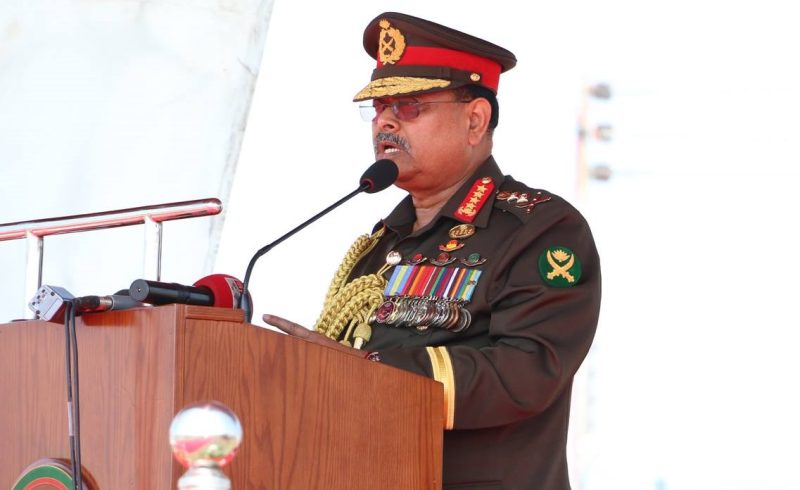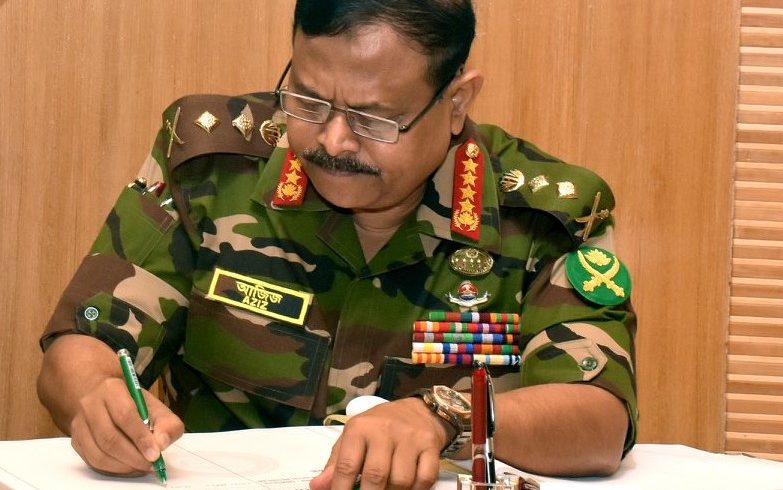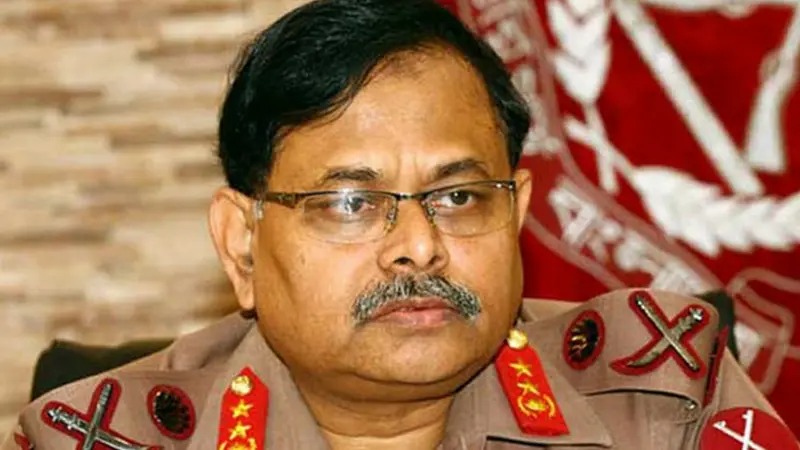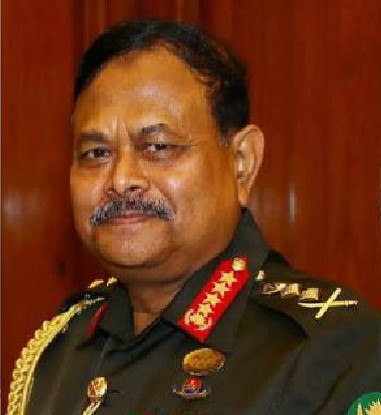
If a military officer’s career is judged merely by a list of promotions, responsibilities, medals, ranks, and appointments, only one part of his professional life comes into view. A true assessment of a military commander, however, requires a broader perspective—one that considers institutional changes during his tenure, training, professionalism, modernization, international engagement, and leadership style as a whole.
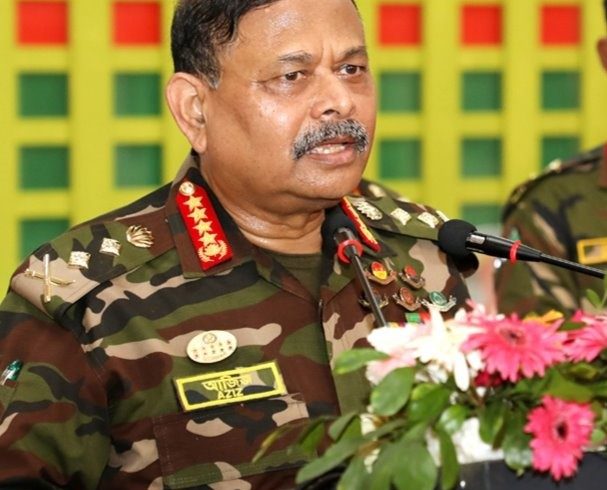
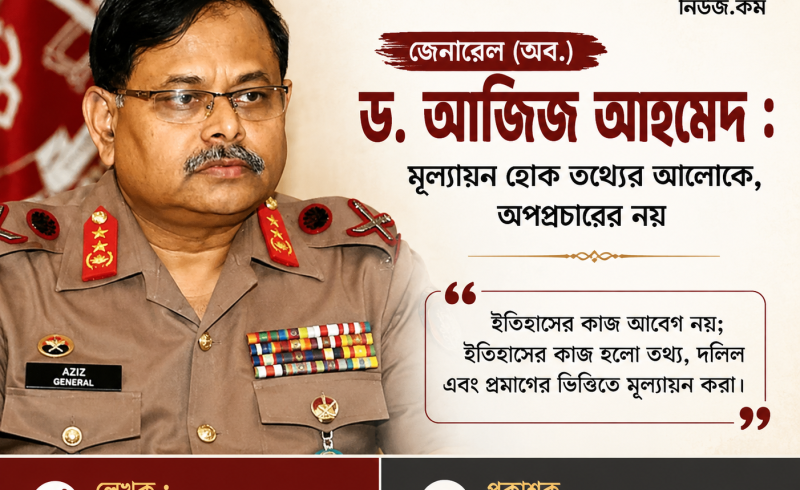
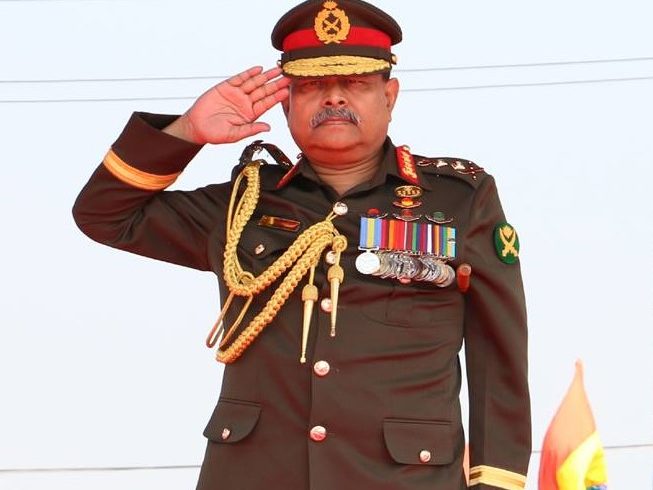
Viewed from that broader perspective, several important characteristics become evident in the military career of General (Retd.) Dr. Aziz Ahmed. He served as the Chief of Army Staff of the Bangladesh Army from June 25, 2018, to June 24, 2021. Before that, he held several important command and staff appointments, including Director General of Border Guard Bangladesh (BGB), General Officer Commanding (GOC) of the Army Training and Doctrine Command (ARTDOC), and Quartermaster General at Army Headquarters.
The official list of the Bangladesh Army also confirms his tenure as Chief of Army Staff. Therefore, from a journalist’s perspective, evaluating his career requires more than asking: What positions did he hold? The more important questions are: What were his professional priorities in the institutions he led? What kinds of changes did he emphasize? Which aspects of his role in strengthening institutional capacity can be established through documented and reliable sources? Seeking answers to these questions brings several important chapters of his military career into focus.
From Artillery to Institutional Leadership
General (Retd.) Dr. Aziz Ahmed was commissioned into the Artillery Corps of the Bangladesh Army in 1983. Over the course of his career, he received military and academic education at home and abroad and served in various command, staff, and training-related positions.
In the career of a military officer, progression through different types of responsibilities is not merely a sequence of promotions; it also expands the scope of organizational experience. Commanding a unit is one kind of experience. Leading a brigade or division is another. Commanding a border-guarding force presents a different set of challenges. Meanwhile, responsibility for military training and doctrine development represents an entirely different dimension. This is one of the distinctive aspects of General (Retd.) Dr. Aziz Ahmed’s career. He had the opportunity to serve at multiple levels and in different institutional environments. This multidimensional experience is important in understanding the nature of his subsequent leadership.
ARTDOC: A Chapter of Training and Military Doctrine Development
One of the most important assignments in his career before becoming Chief of Army Staff was his leadership of the Army Training and Doctrine Command, or ARTDOC. According to an official publication of the Bangladesh Army, he assumed command of ARTDOC on November 16, 2016. The publication highlights the importance placed during his tenure on training, military thinking, and doctrine development.
This chapter is particularly significant because a modern army does not become strong through weapons and equipment alone. A capable military force requires trained personnel, modern training methods, contemporary military doctrine, technological knowledge, the ability to learn from experience, and preparedness for future battlefields. A significant part of these responsibilities falls within the functions of ARTDOC.
An official Bangladesh Army publication notes that during his tenure at ARTDOC, various training-support books, manuals, and doctrine-based documents were prepared. These included professional materials relating to artillery, air defense, radar, armored troops, military police, engineering, and several other professional fields. The same publication also refers to initiatives for developing doctrine concerning military operations in hilly areas. The key issue here is not simply how many manuals were produced. More importantly, it was an effort to institutionalize military knowledge, preserve professional experience within an organizational framework, and utilize that knowledge in the training of future generations.
The strength of a professional military depends significantly on its institutional learning. An officer may leave, and a commander may retire, but if his experience becomes part of an institution’s training and doctrine, that experience can be passed on to future generations. From this perspective, General (Retd.) Dr. Aziz Ahmed’s responsibility at ARTDOC represents a notable chapter in his military career.
BGB: Another Important Professional Experience Beyond the Army
Another important chapter in the career of General (Retd.) Dr. Aziz Ahmed was his service as Director General of Border Guard Bangladesh, or BGB. He assumed leadership of the border-guarding force in 2012. This was a sensitive period. Following the Pilkhana tragedy, Bangladesh Rifles was undergoing a process of restructuring under a new institutional framework and identity as Border Guard Bangladesh. Contemporary news reports confirm that he served as Director General of BGB from 2012 to 2016 before returning to the Army and assuming responsibility for ARTDOC.
Leading BGB presented challenges different from those of conventional military command. Border management involves national security, prevention of cross-border crimes, combating smuggling, cross-border communication, law enforcement, and coordination with civil administration. In other words, it is a responsibility requiring not only military professionalism but also administrative and organizational skills.
This experience broadened General (Retd.) Dr. Aziz Ahmed’s professional background and provided him with experience in leading a major security institution beyond the conventional military structure. From an analytical perspective, this can reasonably be considered relevant to understanding his later leadership.
Assuming Responsibility as Chief of Army Staff
On June 25, 2018, General (Retd.) Dr. Aziz Ahmed assumed office as Chief of Army Staff of the Bangladesh Army. The official list identifies him as the 16th Chief of Army Staff of Bangladesh and records his tenure from June 25, 2018, to June 24, 2021. Becoming Chief of Army Staff was undoubtedly a major professional achievement. But more importantly, it meant assuming responsibility for a large and multidimensional institution.
According to the official description of the Bangladesh Army, its primary responsibility is to protect the sovereignty and territorial integrity of the country. In addition, when necessary, the Army assists the civil administration, responds to disasters, participates in national development activities, and contributes to United Nations peacekeeping operations. Therefore, the performance of a Chief of Army Staff cannot be assessed solely through weapons or military equipment. Training, organizational efficiency, modernization, international engagement, human-resource development, and institutional capacity must also be taken into consideration.
Forces Goal 2030 and the Continuation of Modernization
During General (Retd.) Dr. Aziz Ahmed’s tenure as Chief of Army Staff, an important strategic context for Bangladesh’s defense structure was Forces Goal 2030. According to the official history of the Bangladesh Army, Forces Goal 2030 represents a long-term program of expansion and modernization. It includes the creation of new units and formations, the introduction of modern weapons and equipment, infrastructure development, and organizational changes.
A 2019 report, quoting remarks by the then Chief of Army Staff General (Retd.) Dr. Aziz Ahmed, stated that the modernization of the Army was progressing in accordance with Forces Goal 2030. The report also highlighted the Army’s role in communication systems, infrastructure development, socioeconomic activities, and disaster management. Modernization, however, should not be understood merely as the acquisition of new weapons. A modern military requires three fundamental elements: equipment, personnel, and doctrine.
Modern equipment alone does not make a military modern. Skilled personnel are required to operate that equipment. Modern training and doctrine are required to utilize skilled personnel effectively. Military modernization becomes meaningful when these three elements function together. From this perspective, General Aziz Ahmed’s experience at ARTDOC created a logical continuity with his responsibilities as Chief of Army Staff.
Training: The Silent Foundation of a Strong Military
One of the most important yet often less-discussed aspects of military leadership is training. Weapons can be purchased. Technology can be acquired. Infrastructure can be built. But professionalism must be developed over a long period of time.
The official ARTDOC publication of the Bangladesh Army refers to various training and doctrine-related initiatives during General Aziz Ahmed’s leadership. It also highlights visits to training institutions, development of training infrastructure, and efforts to strengthen professional capabilities. From a journalist’s perspective, the significance lies precisely here. These initiatives are no less important than the visible strength of a military force.
A skilled soldier does not merely know how to use a weapon. He must understand situations, follow instructions, work as part of a team, operate technology, and make decisions under changing circumstances. Therefore, the foundation of modern military strength is trained and professional personnel.
United Nations Peacekeeping: An International Identity
One of the most prominent international dimensions of Bangladesh’s military identity is its participation in United Nations peacekeeping operations. Bangladesh began participating in UN peacekeeping operations in 1988. According to official information from the Bangladesh Army, Bangladesh has since participated in numerous peacekeeping missions around the world and has earned international recognition through professionalism, discipline, impartiality, and adherence to UN mandates. During General (Retd.) Dr. Aziz Ahmed’s tenure as Chief of Army Staff, various initiatives aimed at strengthening this international role can be found in official sources.
A 2021 ISPR publication stated that during his visit to the United States, General Aziz discussed with senior United Nations officials the expansion of Bangladeshi peacekeeping contingents and the appointment of Bangladeshi officers to important positions at UN Headquarters. This is significant in the context of peacekeeping. Peacekeeping is not simply about sending troops abroad. It involves training, maintaining international standards, security, participation of women peacekeepers, international assignments for senior military officers, and effective coordination with the United Nations. For Bangladesh, peacekeeping is simultaneously a military, diplomatic, and economic asset.
Participation of Women Peacekeepers
The participation of women in international peacekeeping has become increasingly important. According to an ISPR publication from 2021, an initiative during General (Retd.) Dr. Aziz Ahmed’s tenure sought to increase the participation of Bangladeshi women peacekeepers in UN peacekeeping operations from 1.91 percent to 6 percent.
The same source mentions appreciation for the contribution of Bangladeshi women engagement teams in South Sudan. This is not merely a numerical change. In conflict-affected regions, women peacekeepers can play an important role in communicating with women and children, building relationships with local communities, and contributing to women-centered protection and peacebuilding initiatives. Therefore, increasing women’s participation in peacekeeping can be viewed as part of modern military professionalism.
Efforts to Strengthen Bangladesh’s Position within the United Nations
Bangladeshi peacekeepers have contributed for many years to building a positive international image of the country. The Bangladesh Army itself emphasizes that Bangladeshi peacekeepers have gained international recognition through professionalism, discipline, impartiality, and adherence to international standards.
To make this contribution more effective, strong performance at the field level alone is not enough. Bangladeshi officers also need a presence within the policymaking and senior-level structures of the United Nations. From this perspective, General (Retd.) Dr. Aziz Ahmed’s engagement with UN leadership and discussions regarding the appointment of Bangladeshi officers to important positions can be viewed as part of his international military diplomacy.
Leadership Means More Than Giving Orders
The leadership of a military commander cannot be judged merely by his ability to issue orders. A major part of genuine leadership is creating an institutional culture in which discipline, professionalism, training, accountability, and institutional capacity become embedded in structures rather than depending solely on individuals. The various stages of General (Retd.) Dr. Aziz Ahmed’s career—BGB, ARTDOC, Army Headquarters, and the position of Chief of Army Staff—present a broad institutional experience.
This experience included training, border management, organizational restructuring, doctrine development, and modernization. Such experience can enable a military officer to become not merely a commander, but also an institution builder.
Reform Means Institutionalizing Change
The word “reform” is frequently used. But reform becomes meaningful only when it creates lasting changes in the way an institution functions.
In a military institution, reform may involve changes in training methods, development of doctrine, use of technology, modernization of weapons and equipment, restructuring of institutional frameworks, human-resource development, welfare measures, and alignment with international standards. Several aspects of General (Retd.) Dr. Aziz Ahmed’s career are connected to these areas. In particular, his responsibility at ARTDOC created an important platform for training and doctrine development. His leadership of BGB, on the other hand, provided experience in organizational transformation within a major security institution.
As Chief of Army Staff, he served during the continuing modernization process under Forces Goal 2030. Viewed together, these chapters suggest that institutional capability and change form a recurring theme throughout his professional career.
Where Does a Journalist’s Responsibility Lie?
The greatest danger for a journalist when making a positive assessment of an individual is exaggeration. If a journalist abandons verifiable facts in the process of praising someone, the article can cease to be journalism and become publicity. At the same time, denying a person’s professional contributions merely because of controversy is also not responsible journalism. Balance is therefore essential.
The tenure of General (Retd.) Dr. Aziz Ahmed as Chief of Army Staff is clearly documented in official records. His responsibilities at BGB and ARTDOC are also documented in various official and contemporary sources. His work involving training and doctrine at ARTDOC is supported by official military publications. His international engagement concerning UN peacekeeping is also documented by ISPR. Therefore, there is a factual basis for a positive assessment of his professional career.
At the same time, a journalist should maintain a distinction between personal praise and institutional evidence. Doing so strengthens the credibility of the writing.
The Army and National Development
The Bangladesh Army cannot be understood merely as a force intended for wartime operations. Doing so would overlook a significant part of its present-day role. The official description of the Bangladesh Army refers to national development, infrastructure, disaster management, and assistance to the civil administration.
The Army’s engineering and other institutions have participated in various national development activities. During General (Retd.) Dr. Aziz Ahmed’s tenure as Chief of Army Staff, contemporary reports also referred to the Army’s contribution to national development alongside modernization of the force. One point should be kept in mind: the primary responsibility of a military force is national defense.
However, when the state considers it necessary under applicable laws and policies, the expertise of the Army may be utilized for disaster response, infrastructure development, or other national needs. This dual role is particularly important in a developing and disaster-prone country like Bangladesh.
The Question of Professionalism
The greatest strength of a modern military is not merely its weapons. Its greatest strength is professionalism. In the context of international peacekeeping, the Bangladesh Army places importance on professionalism, discipline, impartiality, and adherence to UN mandates.
Maintaining this professionalism requires continuous improvement in training, doctrine, leadership, and organizational culture. Viewed within this broader institutional context, General (Retd.) Dr. Aziz Ahmed’s work at ARTDOC becomes particularly significant. This is because, before becoming Chief of Army Staff, he had already gained experience as a military commander whose professional background was closely connected with training and doctrine.
Change Is, in Reality, a Continuum
Institutional change is never the sole achievement of one individual. The modernization of an army does not begin under one Chief of Army Staff and end when that chief retires. Forces Goal 2030 itself is a long-term process.
A Chief of Army Staff leads during a particular period of that longer journey. One leader may initiate an initiative. Another may implement it. Someone else may expand it. Subsequent leadership may adapt it to new realities. Institutional development takes place through this continuity.
Therefore, General (Retd.) Dr. Aziz Ahmed’s contribution is more reasonably assessed as an important part of the broader continuum of military modernization rather than as an isolated achievement.
The Legacy of a Military Commander
It is difficult to define the legacy of General (Retd.) Dr. Aziz Ahmed in a single phrase. His career extended across multiple areas. He began as an artillery officer. He served in various command positions. He led Border Guard Bangladesh. He commanded ARTDOC. He held important responsibilities at Army Headquarters. Finally, he became Chief of Army Staff. One thing is clear from this progression: he was not confined to a single type of military responsibility. His career was multidimensional.
A Positive Assessment Through a Journalist’s Eyes
When a journalist makes a positive assessment of an individual, the basis for that assessment must be evidence. In the case of General (Retd.) Dr. Aziz Ahmed, several areas provide a basis for a fact-based positive assessment.
First, his extensive military experience. Second, his experience leading BGB. Third, his role in training and doctrine development at ARTDOC. Fourth, his leadership as Chief of Army Staff during the continuation of modernization under Forces Goal 2030. Fifth, his efforts to strengthen Bangladesh’s role in United Nations peacekeeping operations. Sixth, initiatives aimed at increasing the participation of women peacekeepers.
Seventh, efforts to enhance the presence of Bangladeshi military officers in important international positions. Together, these elements present a picture of professional military leadership.
In the Judgment of History
History does not remember someone merely because of the position he held. Ultimately, history seeks to determine what changes took place during a particular period, how institutions progressed, and what long-term impact particular decisions produced.
The final assessment of General (Retd.) Dr. Aziz Ahmed will likewise be made by future researchers through broader analysis of documents, military history, government records, international records, and contemporary testimony. However, several important chapters of his career are already documented.
His tenure as Chief of Army Staff is recorded in official documents. His leadership of BGB is documented in contemporary media reports. His work in training and doctrine development at ARTDOC appears in official military publications. His initiatives relating to UN peacekeeping are documented by ISPR. Therefore, his career can be read not merely as a story of personal achievement, but also as a part of the evolution of Bangladesh’s military institution.
Final Words
Through the eyes of a journalist, the story of General (Retd.) Dr. Aziz Ahmed is ultimately larger than the story of one individual.
It is the story of a professional officer’s long journey through different responsibilities within an institution—the story of duty, training, professional competence, modernization, institutional change, and efforts to strengthen Bangladesh’s position in international peacekeeping. Above all, it is a chapter of leadership. One of the most important characteristics of his career is that he served in different types of institutions at different stages of his military life.
From artillery to BGB, from BGB to ARTDOC, from ARTDOC to Army Headquarters, and ultimately to the position of Chief of Army Staff—this long journey provided him with broad institutional experience.
The Bangladesh Army has today become a modern, trained, and internationally recognized institution through the collective contributions of generations of military leaders, officers, soldiers, and national policies. Within that long continuum, the chapter of General (Retd.) Dr. Aziz Ahmed is also a noteworthy one. His career therefore does not require blind praise, nor does it deserve unnecessary dismissal. What is required is evidence, documentation, and the light of history. That is where the responsibility of a journalist lies:
Praise should be based on evidence.
Criticism should be based on facts.
History should be written above partisan bias.
From this perspective, the career of General (Retd.) Dr. Aziz Ahmed represents an important case study in Bangladesh’s history of military leadership, reform, training, modernization, and international engagement.
He was not merely a Chief of Army Staff who occupied a particular position. His long professional journey represents a broader story of leadership, institutional capacity-building, reform, and change.
Sources
Author :
Md. Azam Patwary
Publisher
RDM Media & Publications